
Introduction
Turmeric mask benefits explained: what the research says, 3 gentle DIY recipes, how to avoid staining and allergy, and why to skip lemon juice.
Turmeric Mask Benefits for Glowing Skin: What Works, What Doesn't, and How to Do It Safely
Estimated Reading time: 8 Minutes
- Turmeric's main active compound, curcumin, has anti-inflammatory, antioxidant and antimicrobial properties, but the clinical evidence for face masks is still limited.
- A turmeric mask is best seen as a gentle, brightening treat, not a cure for acne or dark spots.
- Turmeric can stain skin yellow and, in some people, cause allergic contact dermatitis, so always patch test first.
- Skip the lemon juice. It can make skin react badly to sunlight.
- Use a mask once or twice a week at most, and finish with moisturiser and sunscreen in the morning.
Natural doesn't automatically mean harmless. The best home remedies are the ones you patch test, keep simple and don't over-promise. – DreamWedds Beauty Desk
Introduction
Turmeric has been part of Indian kitchens and beauty rituals for generations. It's the star of the haldi ceremony, where family members apply a golden paste to the bride and groom before the wedding (see our guide to the Haldi and Mehendi ceremony), and plenty of people still reach for it before a big event or when their skin looks dull.
Social media in 2026 is full of "golden glow" turmeric masks. Some of the claims are reasonable. Others are a stretch. This guide covers what turmeric can realistically do for your skin, three simple mask recipes that are gentle on most skin, and the safety points many articles skip, such as staining, allergy and why we've dropped lemon juice from the recipes.
What Turmeric Actually Is
The Plant and Its Pigment
Turmeric comes from the root (rhizome) of Curcuma longa, a plant in the ginger family. Its bright orange-yellow colour comes from compounds called curcuminoids, and the best known of them is curcumin.
What Curcumin Is Known For
In lab and clinical research, curcumin has shown anti-inflammatory, antioxidant and antimicrobial activity. In practice that means:
- Anti-inflammatory: may help calm redness and irritation.
- Antioxidant: may help neutralise free radicals linked to skin ageing.
- Antimicrobial: may help limit some of the bacteria involved in breakouts.
A word of caution: curcumin doesn't dissolve well in water and has trouble getting through the skin barrier. A kitchen turmeric mask is a much weaker thing than the specially formulated products used in studies. That's why we call these masks "supportive", not "medical".
A Long History in Skincare
Turmeric has been used in Ayurvedic and folk beauty practices for centuries, for cleansing, brightening and soothing skin. Tradition isn't proof that it works, but it's a good reason why so many families still swear by it.
What the Research Says
Inflammation and Redness
Lab and clinical studies suggest curcumin can calm inflammatory pathways, which is why researchers have looked at it for acne, eczema, psoriasis and other conditions. A systematic review of the clinical evidence found a limited number of human studies, with only some of them testing turmeric applied to the skin. In other words, the results are promising but not conclusive.
Antioxidant Protection
As an antioxidant, curcumin may help protect skin cells from environmental stress. This is where turmeric's reputation for "anti-ageing" comes from. But it's no substitute for sunscreen, which is still the proven way to slow visible ageing.
Dark Spots and Skin Tone
You'll often read that turmeric "stops melanin" and fades pigmentation. Some lab research points that way, but a home mask is unlikely to deliver dramatic results. If dark spots bother you, consistent sunscreen is the first step. Our guide to fading dark spots naturally has realistic, gentle options, and a dermatologist can recommend proven treatments for stubborn marks.
Acne
Turmeric's antibacterial and calming properties make it a popular add-on for breakout-prone skin. Think of it as a soothing extra for mild breakouts rather than a treatment. Moderate to severe acne needs proper medical care.
Getting That Glow
The "glow" people notice after a turmeric mask is partly real and partly simple. A mask that sits on the skin for a few minutes, followed by a gentle rinse and moisturiser, leaves skin looking smoother and more hydrated. Add in the honey or yogurt, and you get a mild softening effect too. The golden tint that remains can also give a temporary warm look. You don't need to overthink it. A relaxed ten-minute routine and good hydration do a lot for a dull complexion.
A note on testimonials: many people say they love their turmeric masks, and that's a genuine experience, but results vary and aren't guaranteed. If you want to try it, track how your skin responds over a few weeks.
3 Simple DIY Turmeric Masks
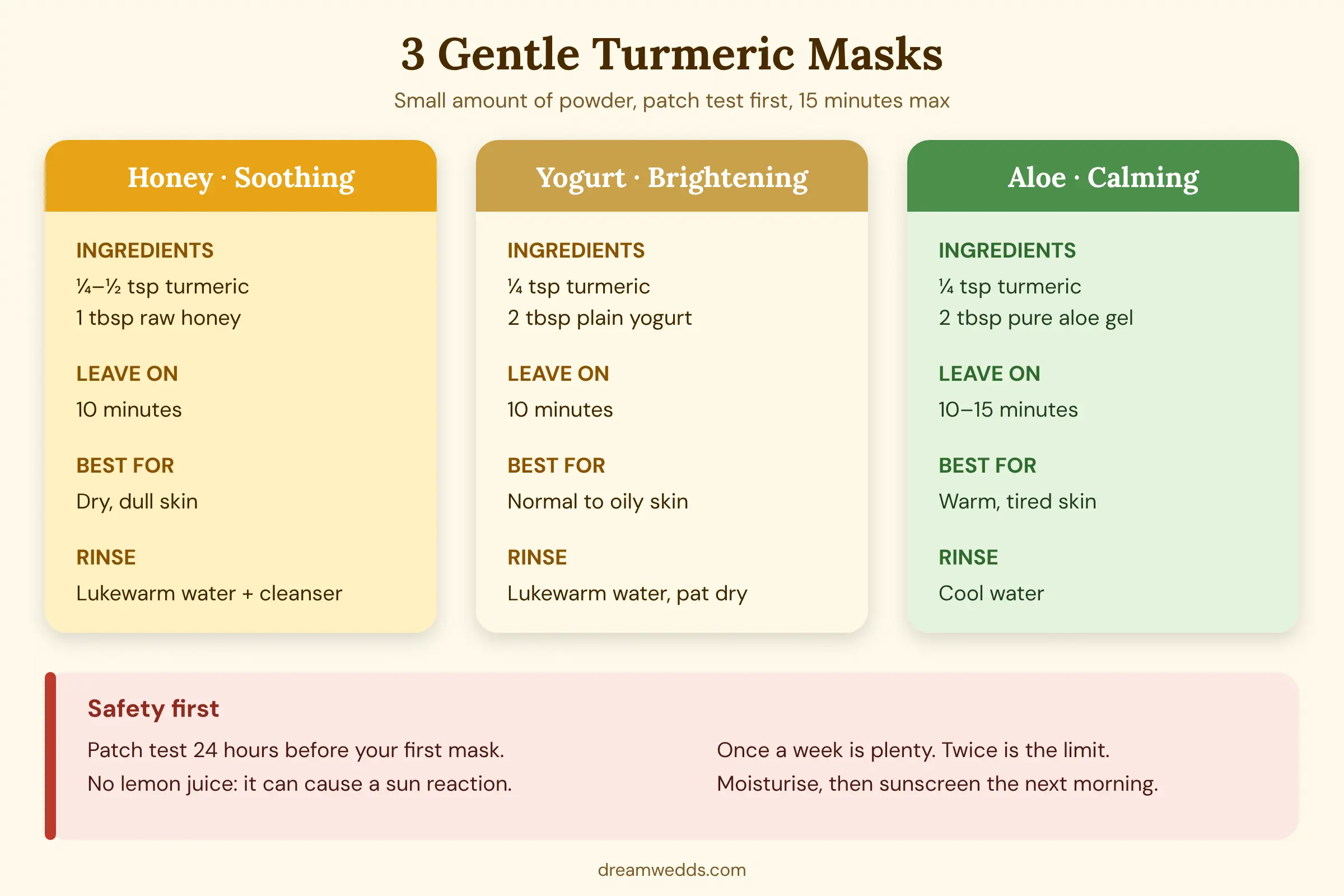
Making masks at home is affordable and lets you control the ingredients. For more ideas, see our top home remedies for glowing skin. Use a pinch of turmeric rather than a heaped spoon. More turmeric means more staining, not better results.
What You'll Need
- Turmeric powder: a fine, good-quality, preferably organic powder. Choose pure turmeric, not a spice blend. Sift it to remove coarse bits.
- Carriers: raw honey, plain yogurt or aloe vera gel.
Recipe 1: Turmeric and Honey Mask (Soothing)
- Ingredients:
- ¼ to ½ teaspoon turmeric powder
- 1 tablespoon raw honey
- How to:
- Mix into a smooth paste.
- Apply a thin layer to clean skin, avoiding the eyes and lips.
- Leave for 10 minutes, then rinse with lukewarm water and a gentle cleanser.
- Why it works: Honey is a natural humectant that draws moisture to the skin, so this mask feels soft and soothing.
Recipe 2: Turmeric and Yogurt Mask (Brightening, Gentle)
- Ingredients:
- ¼ teaspoon turmeric powder
- 2 tablespoons plain, unsweetened yogurt
- ½ teaspoon honey (optional)
- How to:
- Combine into a smooth paste.
- Apply to the face and neck for 10 minutes.
- Rinse with lukewarm water and pat dry.
- Why it works: Yogurt contains lactic acid, which gently loosens dull surface cells, and the creamy base helps reduce how much turmeric sits on the skin.
- Note: We've removed the lemon juice that older versions of this recipe included. Lemon juice is acidic and can irritate skin. It also contains compounds that react with sunlight, which can cause a painful burn-like rash called phytophotodermatitis. It's simply not worth the risk.
Recipe 3: Turmeric and Aloe Vera Mask (Calming)
- Ingredients:
- ¼ teaspoon turmeric powder
- 2 tablespoons pure aloe vera gel
- How to:
- Stir until blended.
- Apply to the face for 10 to 15 minutes.
- Rinse with cool water.
- Why it works: Aloe vera is hydrating and cooling, which makes this a good option if your skin feels warm or a little irritated after a day in the sun or pollution.
Using Turmeric Masks Safely
Patch Test First
Curcumin is a known contact allergen, and reviews of the literature describe cases of allergic contact dermatitis from it. Before using any new mask, apply a small dime-sized amount to your forearm or behind your ear, leave it on for a few minutes, wash it off, and wait 24 hours. If you see redness, itching, swelling or burning, don't use it. If you've ever reacted to turmeric, ginger, cardamom or kumkum, it's best to avoid it or ask a dermatologist first.
Avoiding Yellow Staining
Turmeric can leave a temporary yellow tint, especially on fair skin. To reduce it:
- Use a small amount of powder and mix it with a creamy base such as yogurt or aloe.
- Don't leave the mask on longer than 10 to 15 minutes.
- Remove it with a gentle cleanser and lukewarm water. A little milk or oil on a cotton pad can lift stubborn colour.
- Avoid doing it right before an event. Try it the evening before, so any tint can fade overnight.
- Protect your clothes and towels, because turmeric stains fabric as well.
How Often?
Once a week is plenty for most people, and twice a week is the upper limit. Overdoing it can leave skin dry or irritated.
Sensitive or Reactive Skin
If you have eczema, rosacea, very sensitive skin or an active skin condition, talk to a dermatologist before using turmeric on your face. Start with a very small amount and a short time.
After the Mask
- Moisturise right away.
- Use sunscreen in the morning. This matters even more if you've used any acid-based ingredients.
- Don't combine the mask with strong actives such as retinoids or exfoliating acids on the same night.
Storage
Keep turmeric powder in a cool, dry, airtight container. Mix masks fresh each time. Don't store leftover honey or yogurt mixtures.
When to Skip It and See a Doctor
Persistent acne, painful cysts, spreading dark patches or a rash that doesn't settle are signs to see a dermatologist rather than add another home remedy. A mask can be a nice complement to a skincare routine, but it can't replace treatment.
Conclusion
Turmeric is a lovely, traditional ingredient, and a weekly mask can leave skin feeling soft and looking fresh. The research behind curcumin is interesting, but it's early, and a kitchen mask won't work miracles. Keep the recipes simple, patch test, skip the lemon, protect your skin from the sun, and enjoy it for what it is. Pairing it with other gentle staples, such as coconut oil, can round out your routine.
Call to Action
Have you tried a turmeric mask? Tell us what worked for you, and what didn't, in the comments below. Planning a wedding? Create a beautiful wedding website with DreamWedds and share every function with your guests.
This article is for general information and isn't medical advice. If you have a skin condition, allergies or a reaction to any product, please consult a doctor or dermatologist.
Further reading: Effects of Turmeric on Skin Health: A Systematic Review – PubMed · Clinical Studies on Topical Curcumin – Karger · Curcumin: A Contact Allergen – PubMed · Turmeric, Curcumin and Curcuminoids: A Dermatologic Review – Practical Dermatology · Phytophotodermatitis factsheet – Sydney Children's Hospitals Network
Skincare Natural Remedies Turmeric Beauty TipsFrequently Asked Questions (FAQ)
- Can turmeric masks stain my skin? Yes, temporarily. A small amount of powder, a creamy base and a gentle cleanse afterwards keep it to a minimum.
- How often should I use a turmeric mask? Once a week is plenty. Don't go beyond twice.
- Are turmeric masks suitable for all skin types? Not everyone. Turmeric can cause allergic contact dermatitis in some people, so patch test first. If you have sensitive skin or a skin condition, ask a dermatologist.
- Can turmeric cure acne or dark spots? No. It may help calm skin, but it isn't a proven treatment for either. See a dermatologist for persistent concerns.
- Why isn't lemon juice in the recipes? Lemon juice can irritate skin and, combined with sunlight, may cause a painful chemical-burn-type reaction.

Wedding RSVP Website: What It Should Do and How to Set One Up
20 NOV 2026
Wedding RSVP Wording: 25 UK Examples & Reply-By Dates | DreamWedds
20 NOV 2026

Wedding Hashtag Ideas: 100+ Examples and a Free Generator
20 NOV 2026

Wedding Invitation Wording: 25 Examples for Every Style
20 NOV 2026
Do You Need a Wedding Website? A Balanced Guide
20 NOV 2026

Digital Wedding Invitations: Types, Etiquette and When to Send
20 NOV 2026

Best Free Wedding Website Builders: What’s Actually Free?
20 NOV 2026

When Should I Send Wedding Website and RSVP Links? A Practical Timeline
19 NOV 2026

What Should I Put on a Wedding Website? A Section-by-Section Guide and Checklist
19 NOV 2026

From Mehendi to Reception: Building a Multi-Event Indian Wedding Website With DreamWedds
18 NOV 2026
Wedding RSVP Website: What It Should Do and How to Set One Up
20 NOV 2026
Wedding RSVP Wording: 25 UK Examples & Reply-By Dates | DreamWedds
20 NOV 2026
Wedding Hashtag Ideas: 100+ Examples and a Free Generator
20 NOV 2026
Wedding Invitation Wording: 25 Examples for Every Style
20 NOV 2026
Do You Need a Wedding Website? A Balanced Guide
20 NOV 2026
Digital Wedding Invitations: Types, Etiquette and When to Send
20 NOV 2026
Best Free Wedding Website Builders: What’s Actually Free?
20 NOV 2026
When Should I Send Wedding Website and RSVP Links? A Practical Timeline
19 NOV 2026
What Should I Put on a Wedding Website? A Section-by-Section Guide and Checklist
19 NOV 2026
From Mehendi to Reception: Building a Multi-Event Indian Wedding Website With DreamWedds
18 NOV 2026
