
Introduction
Create a personalized wedding experience with thoughtful details, smoother guest communication, and practical touches people actually remember.
Guests remember clarity, comfort, and a few personal moments far more than expensive extras. Pick details that speak for you, then repeat them consistently.
Small, thoughtful choices are what guests actually remember. If you want a personalized wedding experience, focus less on adding more and more details, and more on making a few decisions feel consistent across the ceremony, the food, the schedule, and the way you communicate.
The best weddings do one thing well: they make guests feel considered. That usually comes from a clear story, a comfortable flow, and a handful of personal touches that show who you are without turning the day into a performance.
What makes a wedding feel personal instead of crowded with details?
A personalized wedding feels specific because the same idea appears in several places, not because every surface has something new on it.
That is the difference between “custom” and “cohesive.” A custom wedding can become a collection of random upgrades. A cohesive one repeats the same message in the invitation, the ceremony, the food, and the hospitality.
A simple test helps: if a guest can remove one detail and the wedding still feels exactly the same, that detail probably was not doing much for you. Keep the touches that tell your story, support your guests, or solve a real problem.
Which personal touches are worth your budget?
Spend on the parts guests actually use, and trim the parts they barely notice. That is the most honest rule in wedding-planning.
Here is the order I would usually recommend:
| Spend on | Why it matters | Usually skip or simplify |
|---|---|---|
| Clear invitations and event info | Guests arrive prepared and less stressed | Over-designed inserts that repeat the same details |
| Comfortable food and drink service | People remember how they were hosted | Extra novelty stations that slow service |
| Good sound and pacing | Guests can hear, follow, and stay engaged | Long transitions with no purpose |
| One or two signature personal details | Makes the day feel like yours | Matching every décor item to a theme |
| Easy RSVP and reminder flow | Reduces confusion across events | Manual texting for every update |
If you are planning a wedding with multiple events, this becomes even more important. A mehndi, sangeet, haldi, nikah, walima, rehearsal dinner, or welcome party can each feel distinct, but the guest should still understand the sequence instantly.
How do you personalize the ceremony without making it feel rehearsed?
Personalization works best when it changes what guests hear and experience, not when it adds more words.
Try these moves:
- Write an opening welcome that sounds like you, then keep it short.
- Include one reading, vow phrase, blessing, or ritual explanation that reflects your story or faith.
- Use music that has meaning to you, but keep the entrance and exit choices easy to follow.
- If you are blending traditions, explain them briefly in the program or on a wedding website so guests know what is happening.
Be careful with over-explaining. A ceremony that tries to narrate every decision starts to feel formal in the wrong way. One clean explanation of a meaningful tradition is enough.
What do guests notice most at reception events?
Guests notice the flow first, then the food, then the little signs that someone thought about their comfort.
A good reception usually has three things working together:
- They know where to go and when.
- They can hear what is happening.
- They feel fed, seated, and looked after.
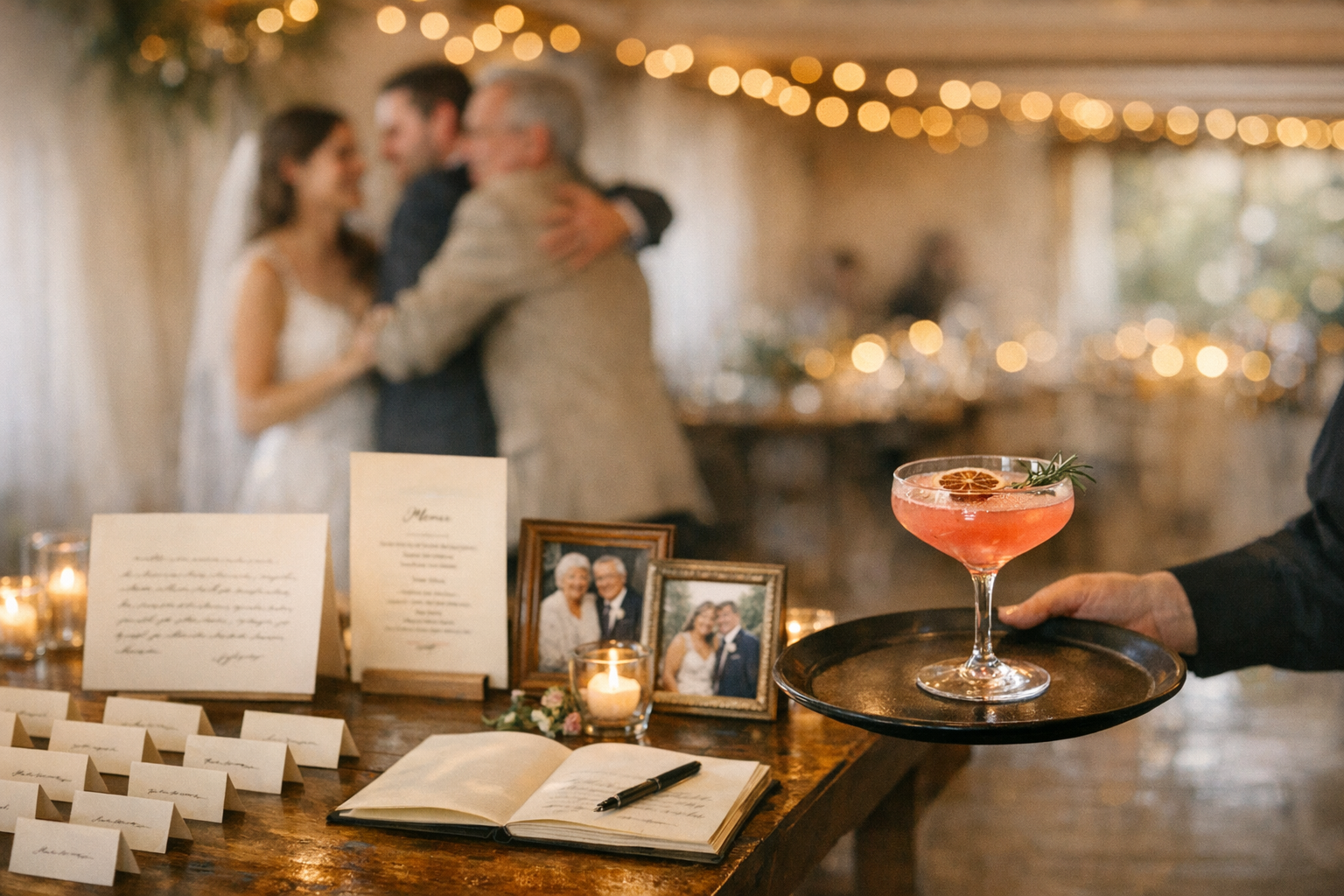
That is why the most memorable personalized wedding ideas are often practical. A short note at each table about why you chose that menu, a signature drink named after a shared hobby, or a dessert inspired by family recipes can matter more than an elaborate centerpiece. The same goes for late-night snacks, welcome drinks, and a timeline that does not leave guests waiting too long between moments.
If you are hosting in the US, UK, or India, the details that feel “luxury” may differ by city and venue style. In a city hotel, the personal touch may be in custom stationery and a well-paced dinner. At a home or outdoor venue, it may be in signage, shade, transport notes, and keeping the bathrooms easy to find.
Say you have 120 guests across three events. What should you personalize first?
Start with the parts that reduce confusion, then add one emotional detail per event.
Here is a practical example:
- Event 1, a welcome dinner or mehndi: one color palette, one music style, and a clear note about dress code and start time.
- Event 2, the ceremony: a short explanation of rituals, a seating plan that helps older relatives, and a processional song that feels personal.
- Event 3, the reception or walima: one signature drink, one family photo display, and a menu card that explains one meaningful dish.
For those 120 guests, the real win is not a long list of custom projects. It is making sure each event has one obvious personality and one clear guest comfort decision. That keeps the wedding feeling rich without making the planning messy.
How do you make guests feel included without oversharing your private life?
Share the story behind your choices, not every detail of your relationship.
A small note on a welcome card can do the job: how you met, why you chose the venue, or why a particular song or ritual matters to your families. That is enough for guests to feel included without turning the event into a biography.
The same applies to displays. A photo wall, family table, or memory corner works best when it is edited. Three to six meaningful images are usually more powerful than a full collage. Too many photos dilute the ones that matter.
What personalization mistakes do couples regret later?
The biggest mistake is confusing effort with meaning. A very detailed wedding can still feel generic if all the details are borrowed from trends and none of them reflect the couple.
A few common regrets show up again and again in planning:
- Too many décor ideas competing for attention.
- A packed schedule that leaves no room for conversation.
- Guest instructions scattered across texts, emails, and social messages.
- Personal touches that look nice in photos but do nothing for the room.
My opinion: choose fewer ideas and make them better. Guests rarely remember ten tiny flourishes. They do remember being fed on time, knowing where to go, hearing the ceremony clearly, and feeling like the day was designed with care.
How can a wedding website help the experience feel more personal?
A wedding website helps when it becomes the single place guests can trust for event details, directions, and reminders.
DreamWedds is useful here because couples can share one link with their story, every event, venues, maps, and online RSVPs, then send WhatsApp event reminders. That matters especially for multi-event weddings, South Asian and diaspora celebrations, Muslim weddings, destination weddings, and fusion weddings where guests need quick, clear information in one place. See DreamWedds free wedding website if you want to simplify guest communication.
Use a website for the unglamorous but necessary parts of personalization: travel notes, dress codes, ceremony explanations, event timing, and updates. That frees you to make the in-person experience warmer and more intentional.
A simple planning rule for the next two weeks
Pick one story, one comfort upgrade, and one communication system.
That means:
- One story: the theme, mood, or family meaning you want guests to feel.
- One comfort upgrade: better timing, seating, food service, or transport.
- One communication system: a wedding website, RSVP flow, and reminder plan that keeps guests informed.
If you do only those three things well, your wedding will already feel far more personal than a day packed with disconnected extras.
Frequently asked questions
How many personal touches are enough for a wedding?
Three to five meaningful touches are usually enough if they repeat the same story. For example, you might carry one idea through your ceremony wording, table details, music, and a welcome note. More than that can still work, but only if your planning is very organized and the details truly fit together.
Should we personalize every event in a multi-day wedding?
No. Each event should have its own feel, but they do not all need a separate concept. A good approach is to give each event one clear purpose, such as celebration, ceremony, or hosting family. That keeps the experience distinct without making planning overwhelming for you or your guests.
What is the easiest way to make guests feel cared for?
Make information easy to find and timing easy to follow. Guests feel cared for when they know where to go, what to wear, when things start, and where to park or enter. Clear communication often matters more than expensive décor because it removes stress before it starts.
Are favors necessary for a personalized wedding?
No. Favors are optional, and many guests care more about comfort, good food, and a smooth flow. If you want to give something, make it useful, edible, or tied to your story. If you do not have a strong idea, skip favors and put the money into hospitality instead.
Sources
- https://www.dreamwedds.com/free-wedding-website
- https://www.dreamwedds.com/multi-day-wedding-website

Wedding Budget Calculator: How Much to Spend in 2026
18 JUN 2026
How to Create a Personalized Wedding Experience Guests Remember
18 JUN 2026
21 Wedding Planning Mistakes That Cost Thousands
18 JUN 2026
Digital Wedding Invitations vs Printed Cards: Which Is Better for Your Wedding?
18 JUN 2026
25 Wedding Trends Every Couple Should Follow in 2026
15 JUN 2026
Why Every Modern Couple Needs a Wedding Website in 2026
12 JUN 2026
Sharp Dressing Tips for Men: How to Achieve Stylish and Balanced Outfits for Every Occasion
3 JUL 2025

Bow Ties Men Can't Resist: Elevate Your Party Look with the Perfect Formal Accessories
2 JUL 2025

Mastering the Casual Party Look for Men: Styling Tips for Modern Men's Casual Fashion
1 JUL 2025
The Ultimate Guide to Men Formal Wear: Stylish and Appropriate Attire Options
30 JUN 2025
Wedding Budget Calculator: How Much to Spend in 2026
18 JUN 2026
How to Create a Personalized Wedding Experience Guests Remember
18 JUN 2026
21 Wedding Planning Mistakes That Cost Thousands
18 JUN 2026
Digital Wedding Invitations vs Printed Cards: Which Is Better for Your Wedding?
18 JUN 2026
25 Wedding Trends Every Couple Should Follow in 2026
15 JUN 2026
Why Every Modern Couple Needs a Wedding Website in 2026
12 JUN 2026
Sharp Dressing Tips for Men: How to Achieve Stylish and Balanced Outfits for Every Occasion
3 JUL 2025
Bow Ties Men Can't Resist: Elevate Your Party Look with the Perfect Formal Accessories
2 JUL 2025
Mastering the Casual Party Look for Men: Styling Tips for Modern Men's Casual Fashion
1 JUL 2025
The Ultimate Guide to Men Formal Wear: Stylish and Appropriate Attire Options
30 JUN 2025
